
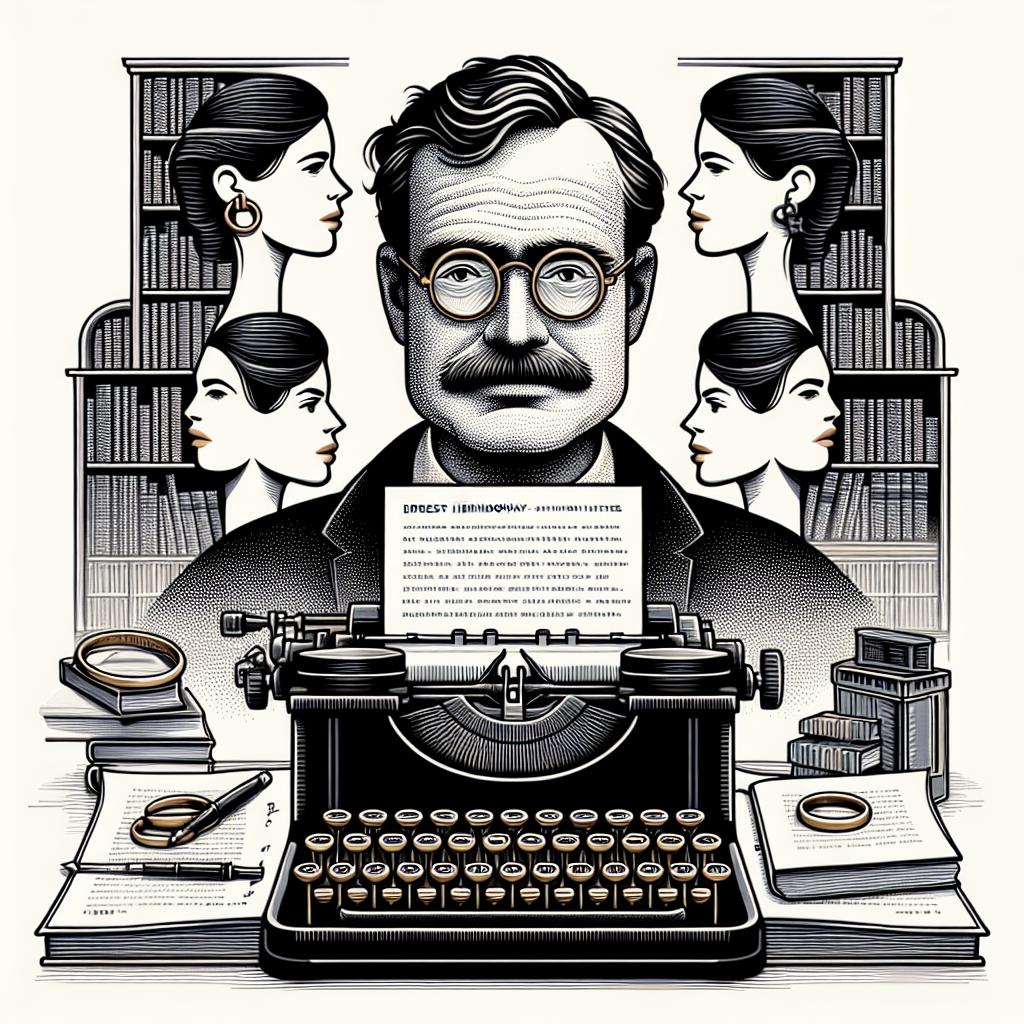
Mrs. Hemingway
Ernest Hemingway, a towering figure in 20th-century literature, was known not only for his impactful prose and adventurous spirit but also for his complex personal life. Over the years, Hemingway’s journey through love saw him marry four different women, each of whom played a significant role in the evolving tapestry of his life. This blog post delves into the stories of Hemingway’s four wives, exploring how each marriage impacted the renowned author personally and professionally. From the passionate beginnings with Hadley Richardson to the turbulent relationship with Martha Gellhorn, and finally his last marriage, we examine the complexities and influences that these women had on Hemingway’s life and work. Join us as we explore the intimate chapters in the life of one of literature’s most enigmatic figures.
Before meeting his other wives, Ernest Hemingway was married to Hadley Richardson.
Hemingway’s first marriage was to Hadley Richardson, a woman who was integral during the formative years of his writing career. The couple met in Chicago in 1920 and married in 1921, moving shortly after to Paris. This period was crucial for Hemingway, as he mingled with other notable expatriates, including F. Scott Fitzgerald and Gertrude Stein, marking the beginning of his growth as a writer.
Hadley provided a stable and supportive environment for Hemingway, despite the financial hardships they faced. Her unwavering belief in his talent provided a backbone as Hemingway worked on his early manuscripts. However, the strains of living in Paris and Hemingway’s growing fame soon took their toll. By 1926, Hemingway began an affair with Pauline Pfeiffer, leading to the eventual collapse of their marriage. In 1927, Hadley and Hemingway divorced, closing a bittersweet chapter in both their lives.
Months after his divorce, Ernest Hemingway married his second wife, Pauline “Fife” Pfeiffer.
Pauline Pfeiffer, lovingly known as Fife, entered Hemingway’s life at a time of both personal and professional upheaval. A journalist and fashion writer, Pfeiffer met Hemingway in Paris through mutual friends. Their attraction was immediate and intense, culminating in their marriage in May 1927, merely four months after his divorce with Hadley was finalized.
Pfeiffer’s influence on Hemingway was significant; during their marriage, he produced some of his most acclaimed work. Notably, she supported him during the writing of “A Farewell to Arms”. However, despite the creative successes, the couple’s relationship became strained due to Hemingway’s restlessness and infidelity. By 1940, these issues culminated in another divorce, marking the end of a decade-long partnership that had profoundly influenced Hemingway’s professional and private life.
Ernest Hemingway married his third wife, Martha Gellhorn, 16 days after his divorce from Pauline.
Hemingway’s third wife, Martha Gellhorn, was an acclaimed war correspondent and novelist, known for her ambition and independent spirit. They first met in Florida, and their relationship blossomed amidst the backdrop of the Spanish Civil War, a setting that inspired much of their shared work. Their marriage in November 1940 was rooted in mutual passion for writing and adventure, but unfortunately, this was also its downfall.
Gellhorn’s career often took her away from home, creating friction between them. Hemingway, accustomed to spouses who prioritized his needs and career, struggled with her independence. By 1945, after years of discord and infidelity, the couple divorced, prompting Gellhorn to once remark that she refused to be a footnote in anyone’s biography. Her departure left Hemingway once again reevaluating his life and relationships.
Ernest Hemingway finally married his fourth wife in 1946.
Hemingway’s last marriage was to Mary Welsh, a journalist with whom he shared a deep intellectual connection. Meeting in London during WWII, their relationship quickly evolved, culminating in marriage in 1946. Mary played a crucial role in Hemingway’s later years, especially as his health began to decline.
Unlike his earlier marriages, Hemingway’s relationship with Mary was more stable, characterized by companionship and mutual support. Despite this stability, the marriage was not without its challenges, including Hemingway’s mental health struggles. Mary remained a steadfast presence in his life until his death in 1961, and posthumously managed his estate, ensuring his legacy endured. Her partnership with Hemingway, though fraught with challenges, finally offered the solace and companionship he had sought throughout his life.
Summary of main points
| Wife | Married | Divorced | Contributions |
|---|---|---|---|
| Hadley Richardson | 1921 | 1927 | Provided emotional support during Hemingway’s early writing years. |
| Pauline “Fife” Pfeiffer | 1927 | 1940 | Supported Hemingway’s career; influence evident in “A Farewell to Arms”. |
| Martha Gellhorn | 1940 | 1945 | War correspondent; inspired collaborative narratives. |
| Mary Welsh | 1946 | Hemingway’s death in 1961 | Provided companionship during Hemingway’s later years and managed his estate. |

